The short answer
Both are top-end panels, and at the 530 W size we fit they are very close. The AIKO Neostar 3S+ is slightly more efficient, a little smaller and lighter, has a black frame and a 25-year product warranty. The LONGi Hi-MO X10 matches it on heat performance and on the 30-year output guarantee, and it’s the panel our packages are built on. Choose AIKO if the look of your roof matters most; otherwise either is a sound choice, and your roof’s layout matters more than the badge.
LONGi and AIKO are the two panel makers we fit, and once people have done their research they often ask which is better. Here is how the two compare on the manufacturers’ own datasheets, what the differences mean on a British roof, and which we’d choose.
LONGi vs AIKO at a glance
Model we fit
LONGi: Hi-MO X10, LR7-60HVD-530M
AIKO: Neostar 3S+60, AIKO-A530-MCE60Db
Cell technology
LONGi: HPBC 2.0 back contact, N-type
AIKO: ABC (All Back Contact), N-type
Efficiency at 530 W
LONGi: 23.5%
AIKO: 23.9%
Size
LONGi: 1990 × 1134 × 30 mm
AIKO: 1954 × 1134 × 30 mm
Weight
LONGi: 28 kg
AIKO: 27.1 kg
Output lost per °C above 25 °C
LONGi: 0.26%
AIKO: 0.26%
Build
LONGi: Dual glass, bifacial
AIKO: Dual glass, bifacial, black frame
Shade (maker's claim)
LONGi: Anti-shading cells, designed to stop shaded cells overheating
AIKO: Partial shading optimisation
Hail test
LONGi: 25 mm hailstones at 23 m/s
AIKO: 35 mm hailstones at 23 m/s
Output guarantee
LONGi: 30 years, at least 88.85% in year 30
AIKO: 30 years, at least 88.85% in year 30
Product warranty
LONGi: 25 years on LONGi's European datasheet, 15 in its latest global warranty
AIKO: 25 years
Checked against LONGi’s and AIKO’s datasheets for the 530 W versions in October 2026. Manufacturers update their ranges and warranty terms, so we confirm the exact model and warranty in your quote.
What is a back-contact solar panel?
Look closely at most solar panels and you’ll see thin silver lines across every cell. Those lines collect the electricity, but they also sit in the way of the light. A back-contact panel moves all of that wiring to the back of the cell, so the whole front face can catch light.
That does two things. More of each cell is working, which is where the higher efficiency comes from, and the panel looks plainer from the street, with no grid of silver lines.
HPBC 2.0 (LONGi’s Hybrid Passivated Back Contact, second generation) and ABC (AIKO’s All Back Contact) are each maker’s own version of the idea, and both use N-type silicon cells. Both makers publish figures claiming their back-contact panels produce more than conventional panels of the same size. Those come from their own tests and simulations, so treat them as a direction rather than a promise.
What actually matters on a UK roof
Efficiency, if your roof is small
Efficiency tells you how much power you get from each square metre of panel. It matters most when roof space is the limit, as it is on plenty of terraces and semis. At 530 W, AIKO’s panel is 23.9% efficient and LONGi’s is 23.5%, because the AIKO is 36 mm shorter for the same power. Across twelve panels that’s about half a square metre less roof. It’s a real difference, but a small one: whether an extra panel fits usually comes down to the shape of your roof, vents, skylights and edge clearances, which is what the design is for.
Shade
Chimneys, dormers and trees cast shadows across part of a panel. Both makers say their cells cope better with partial shade: LONGi says its panels resist shading losses and are designed to stop shaded cells overheating, and AIKO lists partial shading optimisation as a core feature. These are manufacturer claims, and neither panel turns a badly shaded roof into a good one. We run a year-round shading analysis on every design in OpenSolar, so you see the effect of your own chimney or tree before you commit.
Heat
Panels produce a little less as they warm up. Both lose 0.26% of their output for every degree above 25 °C, so there’s nothing between them here.
Looks
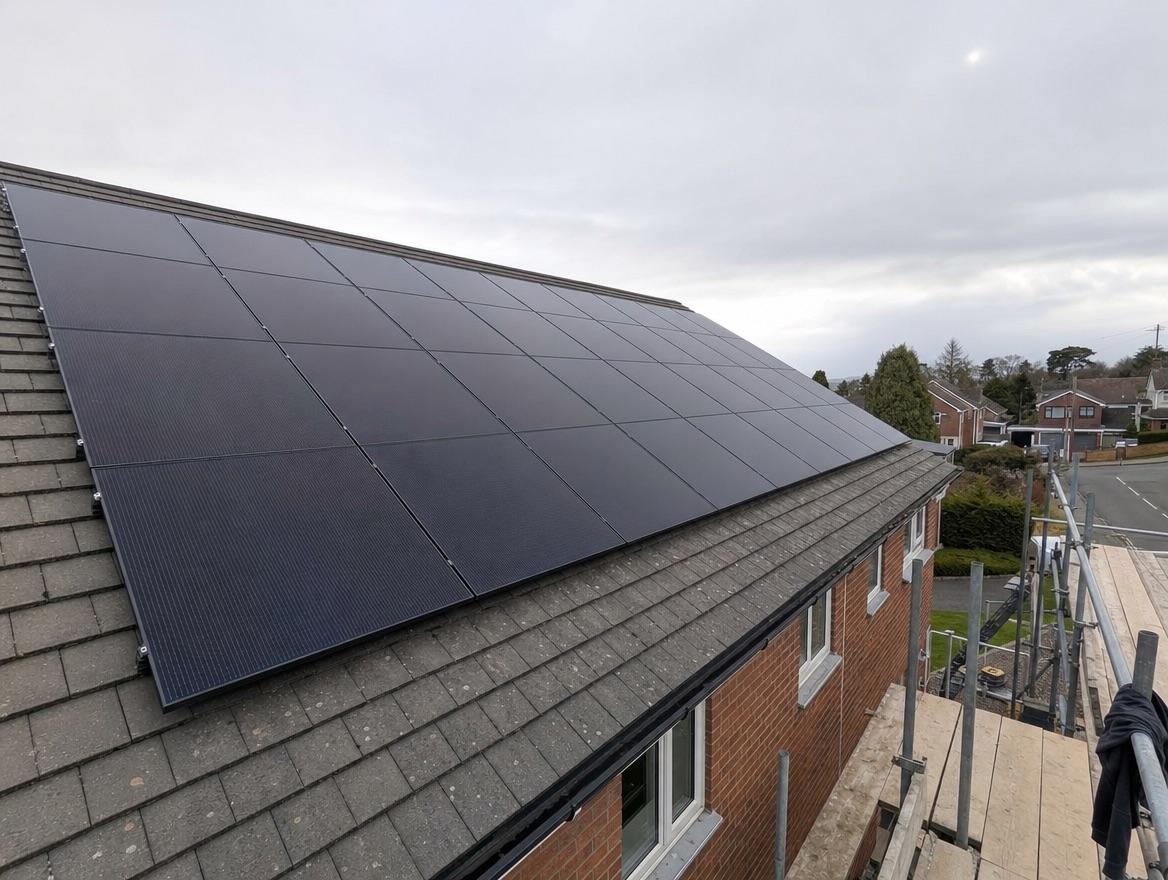
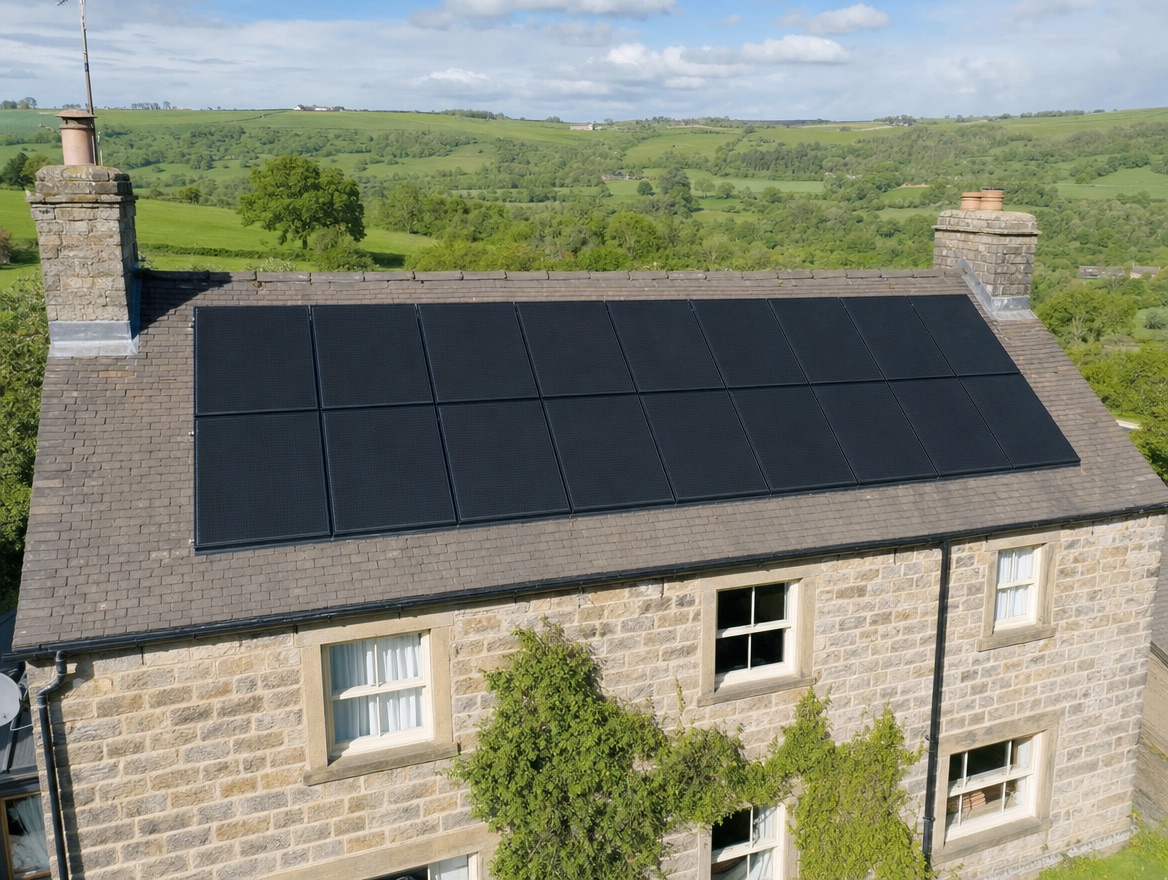
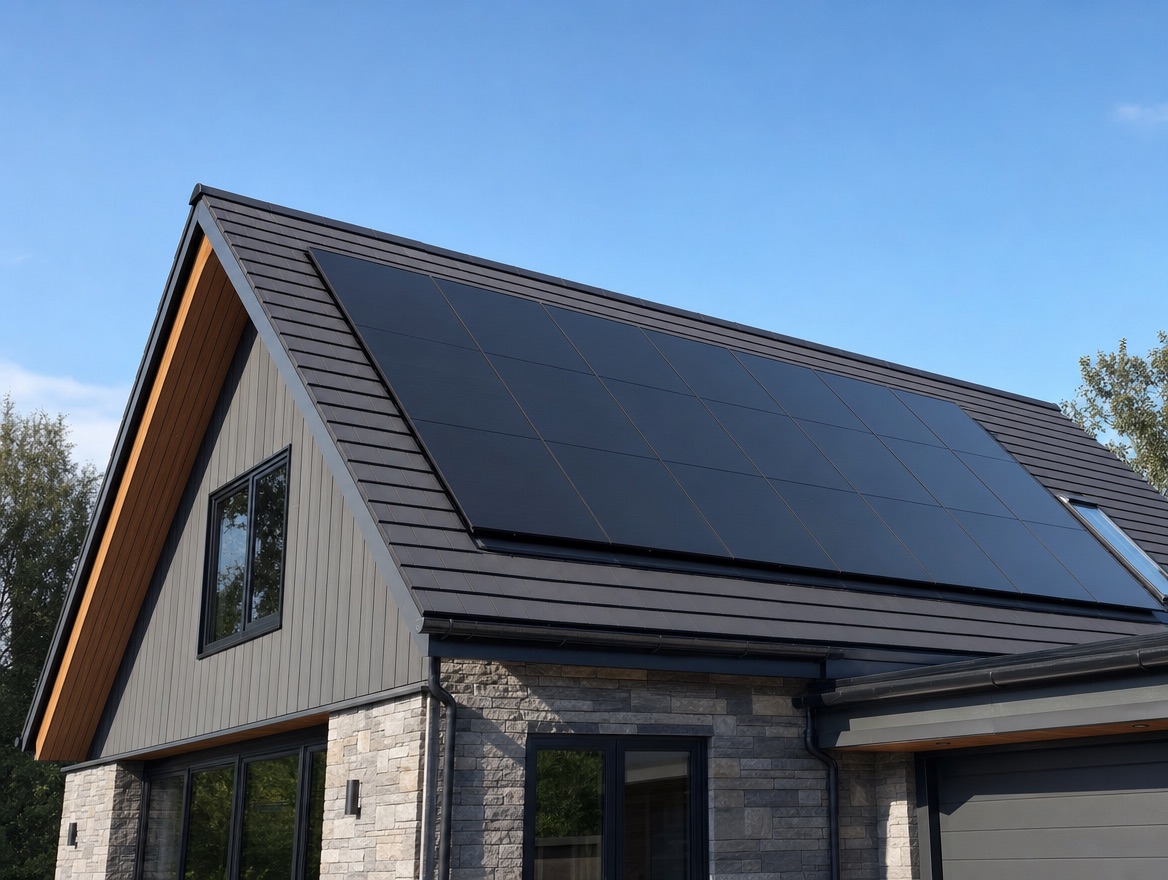
Neither panel has gridlines on the front. The Neostar adds a black frame, and if the look of the roof is your priority, it’s the one we’d suggest.
Bifacial: not a deciding factor on a pitched roof
Both are dual-glass bifacial panels, so the back can turn reflected light into power too. That depends on light reaching the back of the panel, which happens far more on flat roofs and ground mounts than on a panel sitting close to a pitched roof. It’s not a reason to pick one over the other for a house.
Warranty
The output guarantees are identical: at least 99% of rated power in the first year, falling by no more than 0.35% a year after that, to at least 88.85% in year 30. On the product warranty, which covers faults in materials and manufacture, AIKO gives 25 years. LONGi’s European datasheet for this panel also says 25 years, but its latest global warranty document says 15, so we confirm the terms that apply to your panels in writing with your quote. Our own 10-year workmanship warranty sits on top of either.
Which is better, LONGi or AIKO?
- On the datasheet at 530 W: AIKO, narrowly. Slightly more efficient, a little smaller and lighter, tested with bigger hailstones (35 mm against 25 mm), and a 25-year product warranty.
- On output in real life: very close. The same heat performance, the same 30-year output guarantee, and an efficiency gap of under half a percentage point.
- On looks: AIKO, with its black frame.
- On our packages: every package is built on LONGi, and AIKO can be specified in its place.
What about Jinko Tiger Neo?
We also see people searching for “AIKO Neostar vs Jinko Tiger Neo” and “LONGi vs Jinko”. Jinko makes good panels too. We fit LONGi and AIKO, so those are the two we compare here and the two we stand behind on your roof.
Our verdict
You won’t go wrong with either. If you want the cleanest look, or your roof is tight and every bit of efficiency counts, go AIKO. If not, LONGi does the job just as well in practice, with the same heat performance and the same 30-year output guarantee. Our technical solar designer can lay out both on your roof and talk you through the difference in panel count and yearly generation on a video call, before you decide.
More detail on each: LONGi Hi-MO X10 and AIKO Neostar 3S+.